
The Buff Silkie. The golden teddy bear of the family.
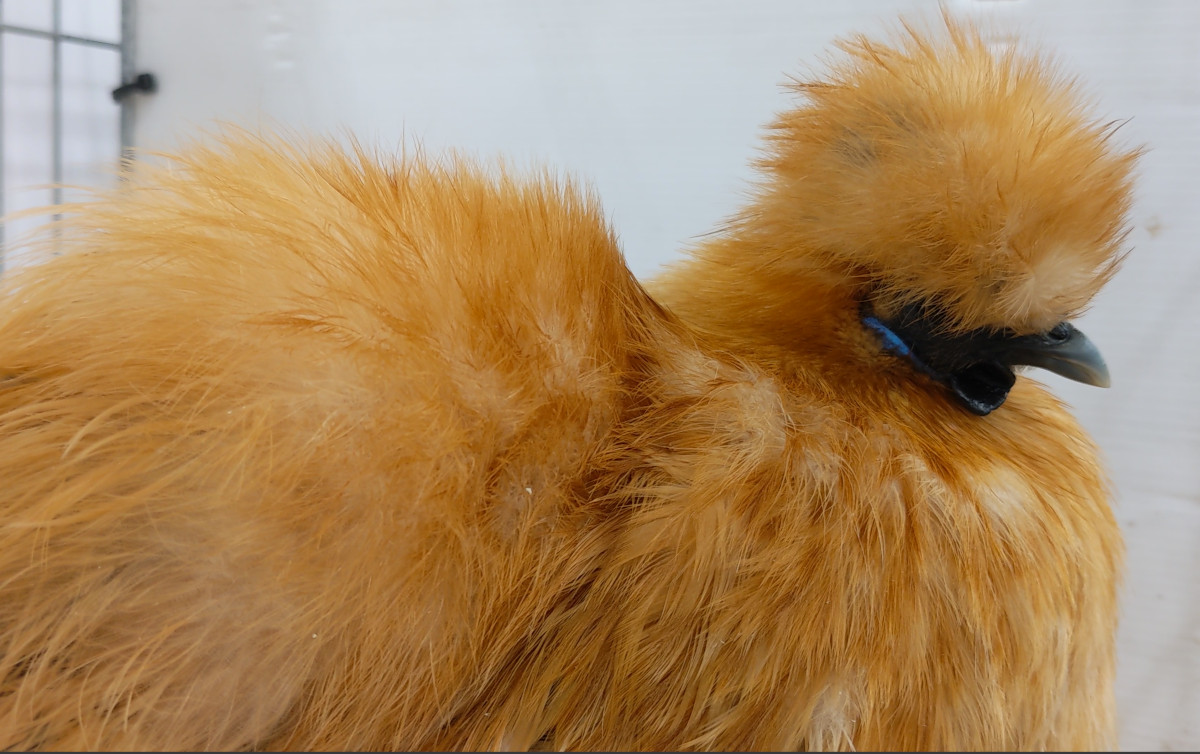
The Buff Silkie is a Golden variety of the Silkie Bantam breed, In the UK they are sometimes called Gold Silkies. Instead of the pure white or the dark black most people picture, its fluff is a soft golden apricot, varying from a pale creamy buff through to a richer ginger gold.
Below: The Buff Silkie hen in close up.
On a Silkie this colour is especially striking, because the feathers don't hold a neat outline. Each strand of fluff catches the light on its own, so the bird looks almost like a little golden teddy bear rather than a chicken.
Silkies are miniature chickens that originated in China and were all originally white and new colours have been added over the years.
Buff Silkie bantam chicks are straw coloured with some, especially the cockerels, having brown streaks down the back.
Apart from the colour, a buff Silkie has the black skin and dark bones, five toes, feathered legs, a walnut mulberry comb and turquoise earlobes. Temperament is calm and friendly, so they're a favourite for families and small gardens.
Hens lay a modest number of small cream eggs ( 80 to 100 a year in my experience) and go broody readily, which makes them excellent natural mothers. Like all Silkies they can't fly, they hate heavy rain, and their crests can get in their eyes, so a dry covered run and the odd Fringe trim keep them comfortable.
Below: A buff Silkie cockerel.
Buff Silkies are a little easier to get hold of than some but are still expensive and quality well coloured birds are rare. Expect to pay $4 - $5 for a hatching egg, $10 - $15 for unsexed chicks, $25+ for growers and $50 or more for adult birds.
Most colours will cover up buff and it need to be selected for carefully otherwise you get chicks the colours of their mothers and most will likely have buff leakage.
They are buff coloured with the same black skin of the other Silkie varieties, and mulberry comb, face, and wattles. These are fairly rare
Buff Genetics:
True buff is harder to breed well than it looks and there are a few common faults.
The colour should be even from head to toe, with no white undercolour, no smutty grey in the fluff and no red or orange patches that scream "ginger".
Cockerels often come out a shade darker than hens and carry dark tips to some feathers or dark stripes along the back.
The male Buff Silkie can lose the fluffy feathers on the wing and revert to stiff quills.
Many birds that look buff as chicks fade towards cream as they mature. Breeders who show them spend years selecting for a deep, even shade that holds through the moult. For a backyard flock that matters less, and a slightly washed-out buff is still a lovely bird.
Buff is be based on either e^b or E^Wh. The clearest buffs are wheaten based. Silkies, however are almost always brown based. You can tell the difference by looking at the under-colour.
Buff is diluted form of red.
Blue dilutes black pigment but has little effect on red pigment. What blue does to a buff is dilute the black feathers so that they are less noticeable; it does little or nothing to the buff colouring, and knowledgeable breeders would not expect it to.