
Can chickens eat bell peppers, jalapeños and chillies. And will they burn their beaks or bumholes?
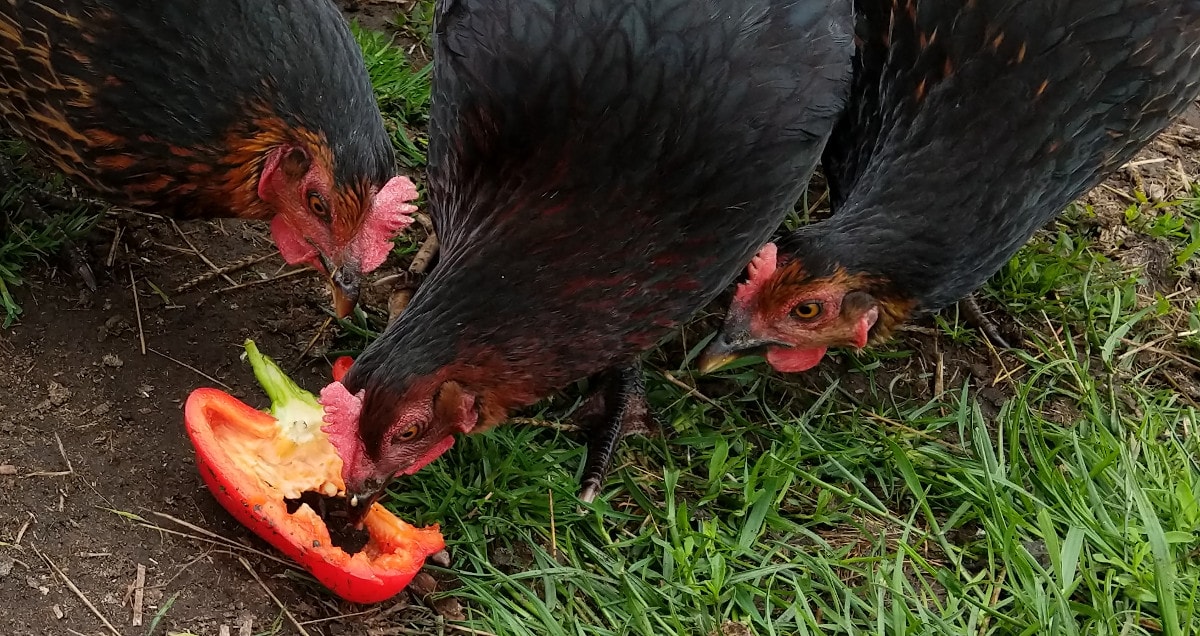
Can Chickens Eat Peppers and Chillies?
Yes, chickens can eat peppers, including sweet bell peppers, jalapeños and hot chillies. The ripe fruits are generally safe to offer as an occasional treat, and chickens can eat the flesh, seeds and inner parts. However, avoid feeding them the leaves, stems or other parts of the pepper plant.
And no, hot chillies do not have the same effect on chickens as they do on humans!
Plain cooked peppers are also suitable once they have cooled. However, avoid giving chickens leftover pepper dishes containing lots of salt, oil, sauces, onion, garlic or other seasonings. Peppers should be fresh, clean and given in moderation alongside a balanced poultry feed.
Yes, mine love them. You can add any surplus peppers you have up to around 5% of the diet of the chicken.
If you feed ripe coloured peppers to the chickens the carotenes in then will make the yolks darker. Even yellow peppers will darken the yolks some. The green ones might, I don’t know.
Below: A video of my chickens eating a red pepper.
While there is supposed to be no difference in nutrition in the dark or light yolks, I prefer the darker yolks and that is something that is not unique to me, most of the people I know prefer darker eggs yolks as well.
Whether they are just more appealing or there is something hard wired in our brains to like the deeper colour more can be a subject of further research.
Are peppers good for chickens?
Yes, peppers contain vitamin A and C as well as traces of other beneficial minerals and nutrients.
Yellow peppers owe most of their colour to violaxanthin along with a number of other yellow-orange pigments, including lutein and beta-carotene.
Below: My hens love peppers. And they take a long time to eat.
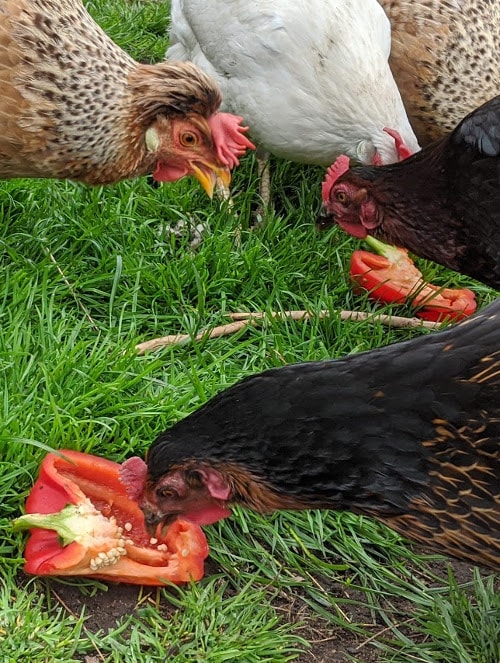
These are known to help maintain the eyes and Lutein contributes to the yellow colour of egg yolks. Beta-carotene is well known as the compound behind the bright orange colour of carrots.
The seeds of any plant always contain the stores of nutrients for the next generation to thrive and pepper seeds are no different. Pepper and chilli seeds are high in vitamin E and some other nutrients beneficial to poultry.
Can chickens eat pepper plants, leaves?
No. you should not feed pepper plants, leaves or stalks to chickens. Peppers are part of the nightshade family which includes aubergines or eggplant, tomato and potatoes and the green parts of the plants in this family contain solanine.
While there is to some extent a dosage factor, one bite will not kill you or the chickens and won’t even make you sick, solanine is a good thing to avoid.
Too much can be very bad for you or the chickens.
Can chickens eat pepper seeds, core and pith?
Interestingly this seems to be the bits of the pepper my birds enjoy the most.
If you take a look at this video you will see they eat the seeds first and the pepper itself second.
Can chickens have yellow, orange and green peppers?
Any colour of pepper is fine for chickens as long as it is ripe. You can tell a pepper is ripe when the seeds are fully formed inside the pepper.
Chickens seem to have a thing for seeds and mine eat them first and then peck at the peppers until they are gone.
Can chickens eat paprika or dried peppers?
Paprika and Cayenne are used in poultry diets to help colour the eggs in commercial flocks. The other additive you can sometimes see in layers pellets is marigold flower petal, they have a similar effect on the egg yolk.
I mix in a few teaspoons per sack as part of diet when collecting hatching eggs, especially late in the season with chickens penned for breeding.
Below: Here is a video I made specially recommending peppers and paprika as a method of producing egg yolks with a better colour.
Cayenne also has the added advantage of helping to keep vermin from chicken feed. Mammals are sensitive to the burn of capsaicin and chickens are not.
What about chillies or chilli pepper?
Chickens cannot taste hot peppers as they lack the ability to sense capsaicin, the substance which cause the burn when you eat a chilli pepper.
Some avian species do have the receptor for capsaicin, called TRPV1, like mammals. Chickens are lacking this activated receptor and hence feel no burn when eating pepper or chilli.
Chickens can eat jalapeno and other hot peppers with none of the side effects you might get.
This all means that if there are chilli seeds and trimmings in the kitchen scraps you throw out for your birds then it won't do them any harm at all.
Sprinkling cayenne pepper will protect the feed from rodents and discourage those rascals from eating the chicken feed while the chickens don't mind a bit.
Can hens eat green, black, pink or ground peppercorns?
I know some keepers are worried about feeding their backyard flock peppery or spicy scraps. You will be relieved to find out that pepper in all it's forms from ground to fresh corns is just fine for chickens.
My grandfather used small doses of spices like black pepper, cayenne and ginger to ward off parasites. The evidence is that it has some effectiveness in flushing worms, although not killing them.
It only takes a tablespoon or two in a gallon feed and there is the added benefit of helping to keep vermin away from chicken feed.
Other things to watch out for:
The colour in red peppers and chillies can give the egg yolk a pink colour if the hens eat a lot of it.
This isn't a problem and will go away in a day or two but it can put fussy eaters of their eggs!
You should avoid rotting or mouldy food. Soft and over ripe is one thing bur growing mould can be toxic.
How to feed peppers to chickens:
Peppers are easy to prepare and need very little work before they go into the run.
Here are a few simple ideas:
- Cut them in half: This gives chickens easy access to the flesh and seeds.
- Chop them into pieces: Useful if you have several birds and want to share the treat around.
- Hang them up: A halved pepper suspended in a suitable feeding holder can provide some entertainment as the chickens peck at it.
- Use garden surplus: Fresh, sound peppers that are surplus to your requirements can make a useful occasional treat.
- Only offer fresh peppers. Avoid anything mouldy, rotten or spoiled, and remove uneaten pieces before they deteriorate.
- As with other treats, don't let peppers displace the balanced feed that provides the nutrients your chickens need for good health and egg production.
- Cayenne or paprika powder is added to the feed mix at a rate of 1 teaspoon per kilogram during the laying season.